






Biological Fermentation Fluid Transfer Solutions
2026-03-09 23:48:45
As the biomanufacturing industry continues to expand, biological fermentation has become a core process in the production of antibiotics, vaccines, enzymes, probiotics, cell culture products, and synthetic biology applications. From early-stage process development to pilot-scale validation and full-scale manufacturing, fluid transfer remains one of the most critical factors affecting fermentation efficiency, process stability, and product consistency.
How can culture media be fed accurately?
How can pH be adjusted in a stable and controlled way?
How can antifoam agents be added on demand?
How can fluids be transferred under sterile conditions?
How can concentration and filtration steps be integrated efficiently into the process?
Behind all of these questions lies one essential requirement: a reliable fluid transfer system.
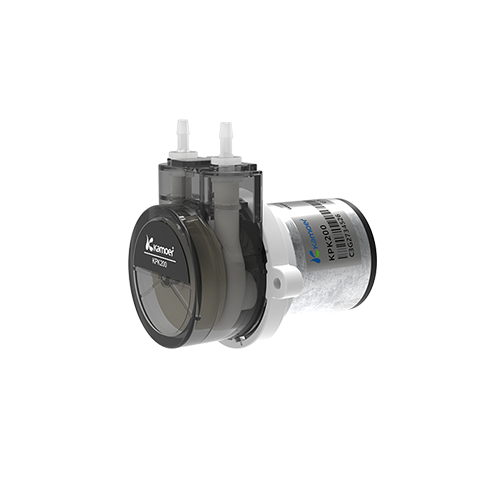
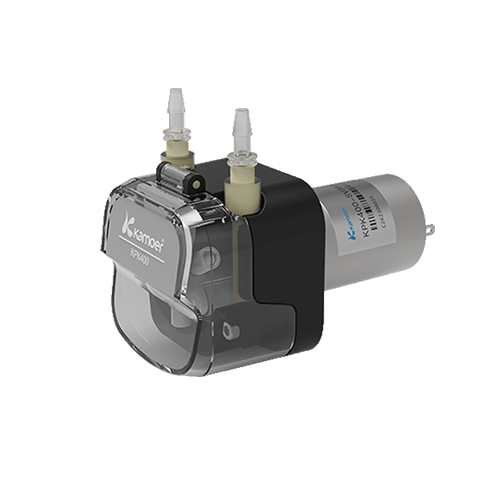
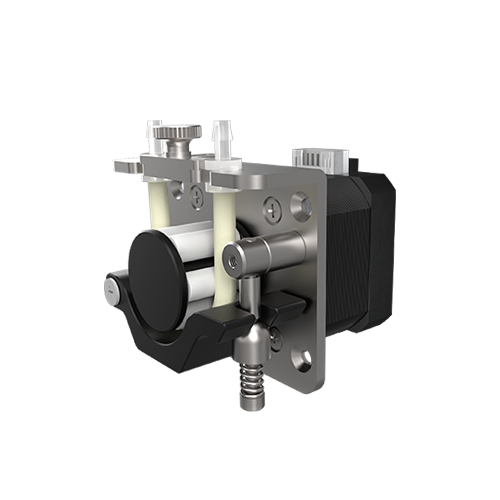
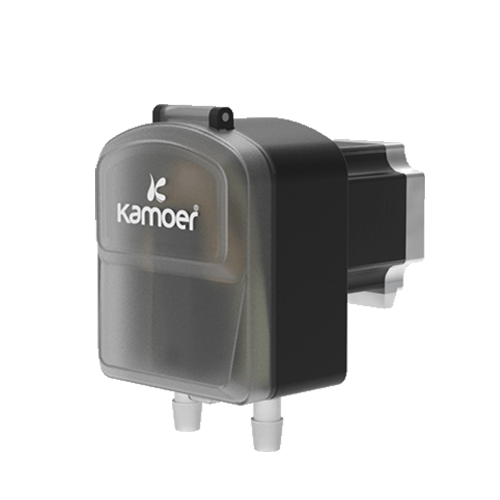
With deep expertise in micro pumps and fluid control technologies, Kamoer has developed a biological fermentation pump solution portfolio covering multiple process stages, from laboratory research and small-scale process development to pilot and large-scale production. These solutions support micro-flow dosing, sterile transfer, low-pulsation delivery, high-flow circulation, and automation integration, helping both equipment manufacturers and end users build more efficient and stable bioprocess systems.
Why Is Fluid Transfer So Critical in Biological Fermentation?
In a biological fermentation system, a pump is far more than a simple liquid delivery tool. It is a key execution component that directly affects the stability and controllability of the process. Feeding, pH adjustment, antifoam dosing, media transfer, circulation, filtration, and downstream concentration all rely on pumps to operate in a stable, repeatable, and controlled manner.
If dosing accuracy is insufficient, microbial metabolism may be affected.
If flow fluctuates excessively, fermentation stability may be compromised.
If sterile transfer cannot be maintained, contamination risk increases.
If integration capability is limited, the efficiency of the entire equipment system may suffer.
For this reason, pumps designed for biological fermentation applications typically need to provide several essential capabilities.
Precise and Stable Flow Control
In fed-batch fermentation and quantitative dosing applications, flow precision directly influences process performance. Especially in micro-flow feeding and continuous dosing scenarios, stable output matters more than simply delivering liquid.
Compatibility with Sterile and Clean Processes
Biological fermentation systems demand high cleanliness standards. In cell culture, single-use systems, and downstream purification processes, the pump must support sterile fluid handling while minimizing contamination risk.
Adaptability Across Process Scales
From parallel bioreactors and wave bioreactors to large fermentation tanks, different systems require different flow ranges, installation footprints, control methods, and continuous operation performance. A one-size-fits-all pump is rarely enough.
Easy Integration into Automated Systems
Modern bioprocess equipment is increasingly intelligent and interconnected. Pumps must not only perform reliably, but also integrate smoothly with sensors, controllers, and communication systems as part of the complete automation architecture.
Based on these practical needs, Kamoer has built a structured product portfolio for biological fermentation applications, enabling customers to select the most suitable fluid transfer solution for each stage of the process.
Fluid Transfer Solutions for Different Bioprocess Applications
1. Parallel Bioreactors
Micro-flow delivery and compact integration for early-stage process development
Parallel bioreactors are widely used in strain screening, media optimization, and process parameter evaluation during early-stage bioprocess development. These systems typically require multiple channels, small working volumes, limited installation space, and very low dosing rates. As a result, the pump must be compact, precise, and easy to integrate.
For this application, Kamoer offers the KPMP10 micro peristaltic pump.
Designed for micro-flow delivery, the KPMP10 features a compact footprint and is well suited for integration into parallel bioreactor systems. It can support media feeding, trace additive dosing, and other precision liquid transfer tasks in research environments.
In R&D equipment, the pump must deliver stable performance while minimizing occupied space and supporting convenient maintenance and clean process requirements. The KPMP10 provides a practical solution for highly integrated laboratory bioreactor platforms and helps users establish more repeatable and scalable process data from the early stages of development.
2. Wave Bioreactors
Sterile transfer with stable control and flexible integration
Wave bioreactors are commonly used in cell culture, seed expansion, and small-to-medium-scale bioprocess applications. Because these systems often rely on single-use bags, the supporting fluid transfer components must meet higher expectations for cleanliness, ease of use, and stable control.
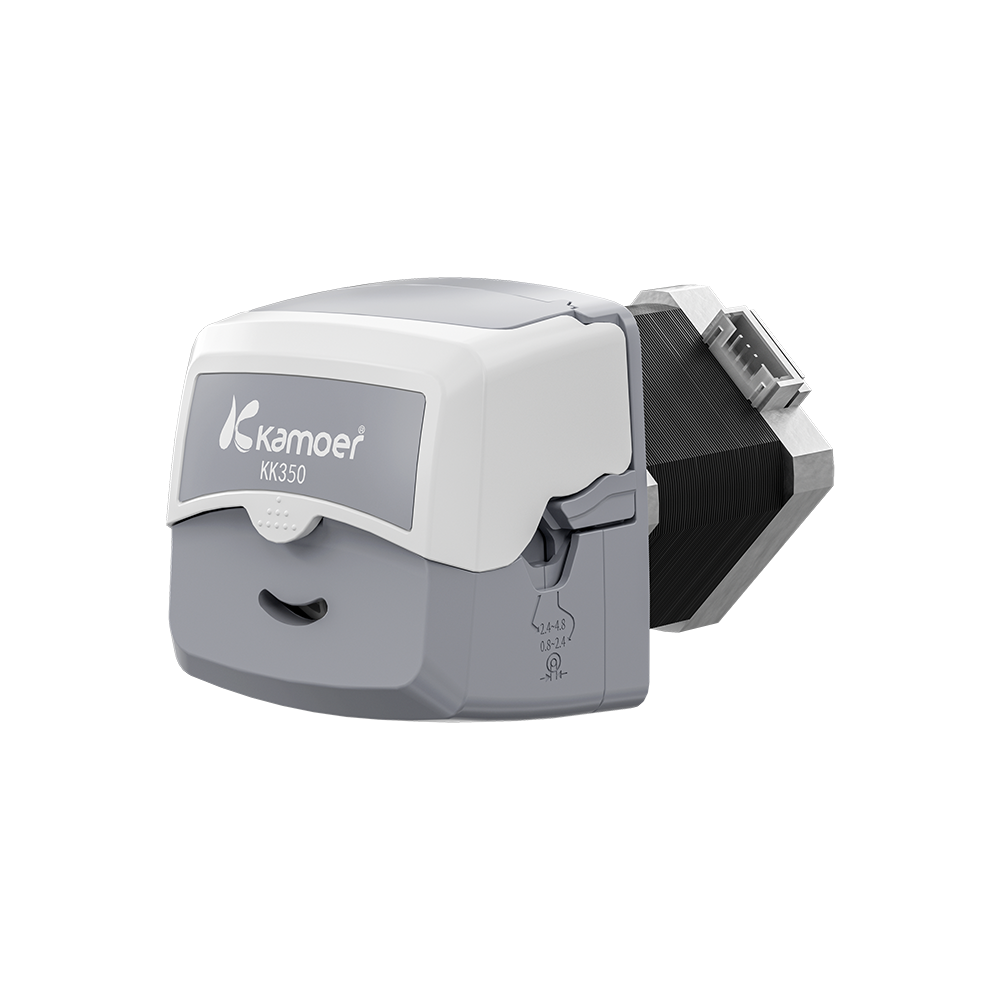
For wave bioreactor applications, Kamoer provides the KK300 peristaltic pump.
The KK300 features a classic flip-top structure for convenient tubing replacement and maintenance. Combined with Kamoer’s closed-loop control technology, it delivers more stable speed and flow performance during operation and is suitable for feeding, dosing, and transfer tasks.
In wave bioreactor systems, the fluid transfer unit affects not only transfer efficiency but also the ease of operation and overall equipment stability. The KK300 offers a balanced solution for sterile transfer compatibility, installation convenience, and stable control performance, making it well suited to small and mid-scale bioprocessing equipment.
3. Fermentation Tanks
Reliable delivery for feeding, pH adjustment, and antifoam dosing
In conventional fermentation tank systems, peristaltic pumps are among the most frequently used fluid handling components. Media feeding, carbon source addition, acid and alkali dosing, and antifoam delivery all depend on controlled and stable pump performance.
For these applications, the KK300 is also a strong fit.
Its stable control performance and convenient maintenance structure make it suitable for routine fluid transfer tasks in fermentation tank systems.
For equipment manufacturers, pump selection affects more than component-level performance. It also influences system architecture, installation efficiency, and serviceability. For end users, pump reliability directly impacts feeding consistency and process reproducibility. As a result, the KK300 can serve as a dependable base solution for fermentation tank fluid transfer applications.
4. Single-Use Bioreactors
Low pulsation and high precision for refined process control
As single-use bioprocess systems continue to grow in popularity, the requirements for supporting pump systems are also increasing. In addition to cleanliness and flexibility, users now pay more attention to pulsation, flow repeatability, and overall dosing precision.
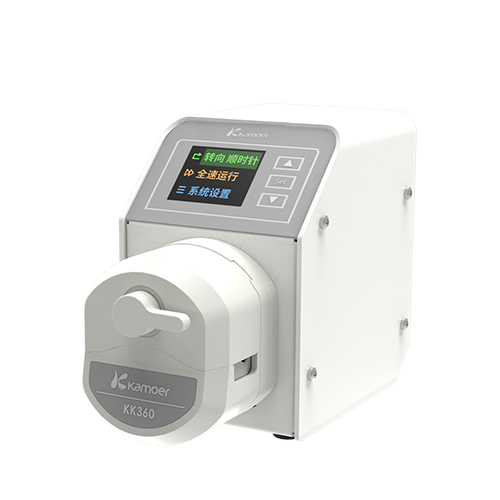
For single-use bioreactor applications, Kamoer offers the KK360 peristaltic pump.
The KK360 features low pulsation and high precision performance, and supports different rotor configurations for flexible adaptation to varying process needs. It is suitable for fine feeding control and applications that require more stable fluid delivery.
In single-use systems, users are often concerned not only with whether liquid can be delivered, but whether it can be delivered smoothly and accurately. The KK360 is designed to provide more refined pump performance for cell culture, sensitive media transfer, and precision dosing applications.
5. Large-Scale Fermentation Equipment
High throughput and efficient transfer for production-scale bioprocessing
As biological fermentation moves from laboratory development to pilot and industrial production, the demands on the fluid transfer system increase significantly. Larger process volumes, longer operating cycles, and higher throughput all require pumps with stronger continuous-duty performance and greater delivery efficiency.
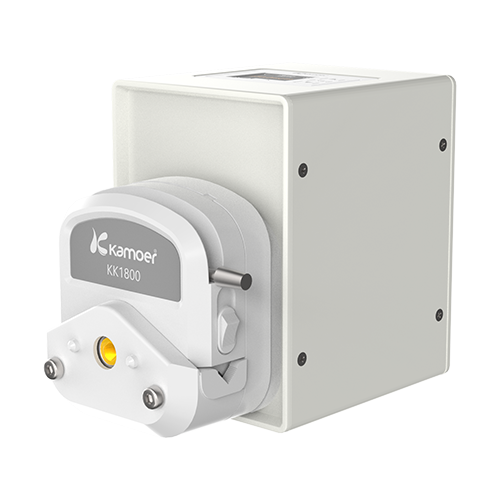
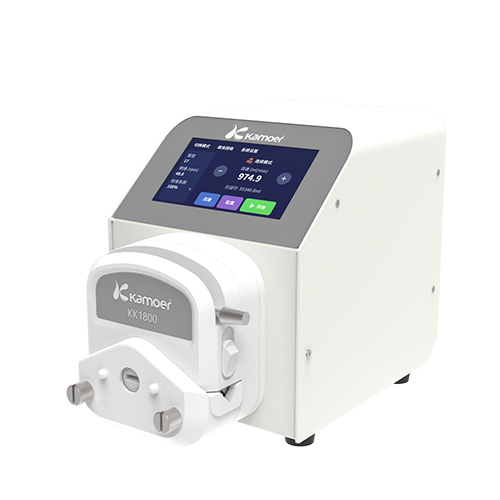
For large-scale fermentation systems, Kamoer provides the KK2000 peristaltic pump.
This solution is designed for high-throughput fluid transfer and is suitable for large-scale fermentation processes requiring stable media delivery, feeding support, and auxiliary transfer operations.
In production-scale applications, pump reliability is especially critical. Unstable fluid transfer can affect not only one operation, but the efficiency and consistency of the entire batch. The KK2000 helps customers bridge the transition from process development to full-scale production with stronger and more efficient flow support.
6. Ultrafiltration Systems
Supporting concentration, filtration, and downstream process integration
After fermentation, many biological products must undergo harvesting, separation, concentration, and filtration. Ultrafiltration is an important part of this downstream workflow and places greater demands on pump flow capacity, control precision, and automation capability.
For ultrafiltration and related downstream processes, Kamoer offers the M7 pump system.
The M7 provides high-flow delivery capability and uses a DC servo motor for more precise control. It can handle both viscous and non-viscous liquids and can be connected to external sensing devices for automated operation.
This makes it suitable for circulation, concentration, buffer exchange, and other downstream fluid handling tasks. It also integrates more easily into automated equipment platforms, helping meet the increasing demand for coordinated control in modern bioprocess systems.
7. Laboratory Equipment and Small Automated Platforms
Precise control and communication-ready integration
In laboratory instruments, small-scale fermentation systems, and custom automation platforms, users typically require more than fluid transfer alone. They also need pumps that can be networked, precisely controlled, easily maintained, and synchronized with multiple devices.
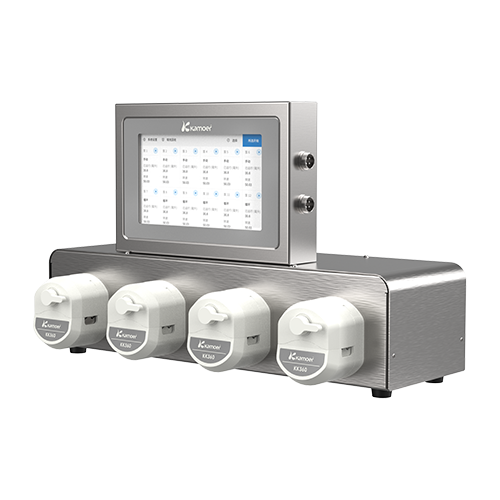
For these applications, Kamoer offers the M2-KK360 peristaltic pump.
This model uses a stepper motor for more precise control and supports quick tubing replacement, a self-adaptive tube clamping structure, and RS485 communication for multi-device networking and system integration.
For platforms that require multi-channel control, coordinated pump operation, or remote communication, the M2-KK360 can help simplify equipment design while supporting future automation upgrades.
Core Advantages of Kamoer’s Biological Fermentation Solutions
Compared with offering a single pump model, Kamoer’s strength in biological fermentation lies in its ability to match different products to different process scenarios. By covering multiple flow ranges, control methods, and equipment types, Kamoer helps customers build more application-oriented fluid transfer systems.
Coverage from R&D to Production
From parallel bioreactors to large-scale fermentation systems, from single-use platforms to ultrafiltration equipment, Kamoer provides a more complete product layout across the bioprocess workflow.
Support for Multiple Process Tasks
Kamoer solutions can be applied to feeding, pH adjustment, antifoam dosing, sterile transfer, circulation, filtration, concentration, and other key bioprocess steps.
Balance Between Transfer Performance and System Integration
Kamoer pumps support flow control, installation flexibility, easy tubing replacement, communication options, and automation compatibility, making them well suited for OEM equipment development and system integration.
Readiness for Automation and Advanced Process Control
As bioprocess equipment evolves toward automation, flexibility, and digitalization, Kamoer’s product portfolio is positioned to support increasingly sophisticated fluid handling requirements.
Empowering Better Bioprocess Performance Through Reliable Fluid Control
In biological fermentation systems, pumps may appear to be only one component among many, but they play a decisive role in process execution. Feeding precision, transfer stability, and automation efficiency all depend on the actual performance of the fluid handling system.
With a product portfolio designed around real fermentation applications, Kamoer supports customers across laboratory research, small-scale development, pilot processes, large-scale production, and downstream treatment. Whether the need is micro-flow precision feeding, high-flow continuous transfer, sterile liquid handling, or automation-ready integration, Kamoer is committed to delivering reliable and application-oriented fluid transfer solutions for the bioprocess industry.
As biomanufacturing continues to advance toward higher efficiency, tighter consistency, and greater automation, fluid control will become even more important. Kamoer will continue to focus on microfluidic and pump technologies to support the evolving needs of biological fermentation systems worldwide.